.png)
SEO Branding Strategy to Create a Unique Brand Identity in 2026
Updated: Aug 2
Most businesses treat SEO and branding as separate jobs. SEO chases rankings; branding shapes perception. Done together, each strengthens the other — search visibility puts your name in front of people repeatedly, and a distinct brand is what makes them choose your result over the one above it.
This guide covers what SEO branding is, what it realistically delivers, how to build a strategy, and the mistakes that quietly undo the work.
What Is SEO Branding?
SEO branding is the practice of using search optimisation to build recognition and authority for a brand, not just traffic for a page. The distinction matters: ordinary SEO targets what people search for, while SEO branding also aims at the point where people begin searching for you by name.
Branded search volume — the number of people typing your business name into Google — is the clearest measure of whether it is working.
Why SEO Matters for Brand Building
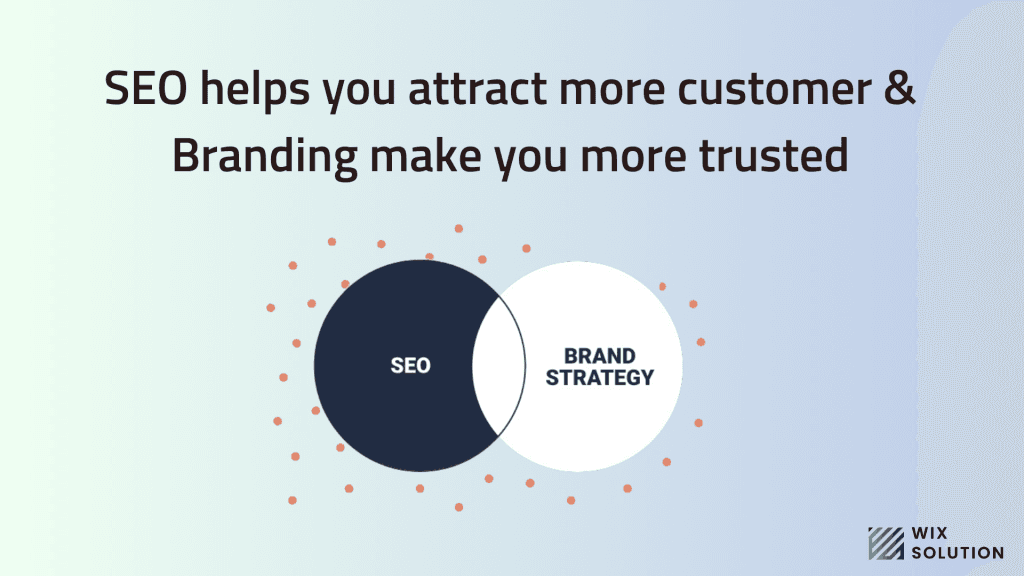
Search is where most brand discovery now begins. Someone researching a problem meets several names in the results, and the ones appearing repeatedly with useful answers start to feel established before any direct contact happens.
Position also carries an implied endorsement. Ranking near the top signals to a first-time visitor that others have found you useful — an assumption fair or not, but one that shapes trust before they read a word.
What SEO Branding Delivers
Discoverability at the moment of need
You appear when someone is actively looking for a solution, rather than interrupting them with an ad while they do something else.
Credibility that compounds
Each piece of genuinely useful content adds to the impression that you know the field. That accumulates in a way advertising does not, because the content stays up and keeps being found.
Traffic you stop paying for
Once a page ranks, the visits continue without per-click cost. The investment is upfront and in maintenance, not in every visitor.
A relationship, not a transaction
Content that answers real questions gives people a reason to return before they are ready to buy, which is where preference is actually built.
How to Build an SEO Branding Strategy
Start with your audience
Everything downstream depends on knowing who you are for. Identify the problems your customers describe in their own words — those phrases become both your keyword targets and your messaging.
Define a distinct identity
A recognisable name, visual identity and point of view. If your content could carry a competitor's logo without anyone noticing, it is not building a brand — it is filling a page.
Publish content only you could write
Depth beats volume. Draw on work you have actually done: client results, methods you use, mistakes you have watched businesses make. Generic advice assembled from other blogs ranks badly and builds nothing. Our on-page SEO guide covers how to structure that content once written.
Earn links from aligned sites
Backlinks remain a strong authority signal, but relevance matters more than volume. A link from a respected site in your field is worth more than dozens from unrelated directories — and it reaches an audience who might actually care.
Keep messaging consistent everywhere
Your website, profiles and listings should describe the same business in the same voice. Inconsistency dilutes recognition and, where business details differ, actively harms local rankings.
An Example Worth Studying

HubSpot is the standard reference for SEO branding done properly. Rather than only targeting product keywords, it built a large library answering the questions its buyers ask well before purchase. That library ranks widely, and the effect is that the company is met as a source of answers first and a product second — which is what makes the eventual product conversation easier.
The scale is not replicable for a small business. The principle is: answer the questions your buyers ask before they are ready to buy.
Mistakes That Undermine SEO Branding
Choosing keywords by volume instead of intent
High-volume terms attract visitors with no interest in buying. Specific, lower-volume phrases matching what your customers actually type usually convert far better.
Neglecting the site experience
Slow loading, awkward mobile layouts and confusing navigation undo the work of ranking. People leave, and that behaviour feeds back into rankings. The technical SEO guide covers the checks worth running.
Inconsistent messaging across platforms
A brand that sounds different on every channel is harder to remember and harder to trust.
Not measuring anything
Without Search Console and Analytics in place you cannot tell which content is building authority and which is filling space. Track branded search volume specifically — it is the clearest signal that branding, not just traffic, is improving.
Sounding like everyone else
The most common failure. Content written to tick an SEO box reads exactly like every competitor's, and a brand built on interchangeable content is not a brand.
Where to Start
Begin with the fundamentals before the branding layer: if your site is not being crawled and indexed properly, nothing else applies. The Ultimate Wix SEO Guide covers that groundwork, and our SEO starting guide is the shorter primer if you are new to it. If you would rather have this handled, get in touch and we will start by auditing where your brand currently stands in search.


